

As a teacher, I sometimes got asked by parents, “Mr. Talley, is my child smart?”
I would tell these parents (as politely as possible, of course) that they were asking the “wrong” question. They should, instead, be asking, “In what ways is my child is smart?”
I taught a child who repeated third grade (not by my personal recommendation, by the way). He made generally poor grades all the way through school … and eventually dropped out of high school.
This high school drop out is now a contractor in NC, building million-dollar homes, and living in one of them himself. As a young boy he was obviously highly mechanically intelligent all along, but that “type of smarts” was never even measured (let alone put at the premium for him as it should have been) during his public school years.
I taught another child who made straight A’s and scored perfect scores on all those governmentally-mandated Almighty year-end tests. To this day, he has never found meaningful work as an adult.
(I should also interject here that we do well when we remember that “smarts” is not everything. Persistence and hard work and “finding our way” go a long way, too.)
All good teachers recognize that all children are “smart”, each in their own way, and you can bet we do our darndest to help them find out how.
My question is; do you do the same with your child/grandchild?
Or do you do like so many - and go primarily by that school report card?
I was 30 before I realized I was “smart” (in the more “traditionally measured” sense of the word).
I had returned to school at ETSU to become a teacher, when I took a Mensa practice test in a class I was taking there. Since I scored extraordinarily high, my professor ( a dear man named Dr. John Taylor) suggested I take the “real” Mensa test in a more qualified setting.
So I sat for the official version and found out I had an IQ that ranked in the 99th percentile of the general population. This surprised me because I had always honestly thought I was “a bit dumb”.
I often can’t tell you what I ate for breakfast. And I sometimes momentarily forget where I’m going in a hallway - I may have to stop a moment to remember (nope, not kidding).
Throw in my “attention deficit disorder” (which simply means I have a very difficult time focusing for sustained periods of time on a single task - actually a lot of folks have it) to my educational equation and I had a brain not-so-fit for standard school. A different kind of “special education” student I was … and so remain. And there are legions of children sitting in schools across America right now who fit that same description.
I spent 30 years on Earth without realizing in what ways I was “smart” (which I found out - for me personally - was primarily anything to do with creativity, words, and logic). But how many countless millions of us never really find out “in what ways we are smart”?
In our region of the world, there is even an added cultural factor that can keep many locals from realizing in what ways we are smart.
And that would be our dialect.
I speak (as likely do many readers of these words) with an authentically thick Southern Appalachian Highland (aka “hillbilly”) dialect - of which I’m rightly very proud. Even in our neck of the woods, we too often assume that we Appalachian natives can’t be “that smart”, simply because of our dialect. Too many of us are our own worst enemy on that account, and therefore remain self-inflicted “diamonds in the rough”.
However, the main thing I see holding us back in American public education - from helping all children find out how they are smart - is our (governmentally mandated) emphasis on high-stakes testing (which in reality can coerce many, if not most, teachers to primarily “teach to the test” - sacrificing creativity and ingenuity; things we greatly need to enhance in our young people).
Your child may or may not be “smart” along standard scholastic measures (such as report cards, governmentally mandated testing, or formal IQ tests).
However, your child may very well be “very smart” in other ways; art, music, mechanics, dance, athletics, or social skills … or even in an area yet unrecognized by most people.
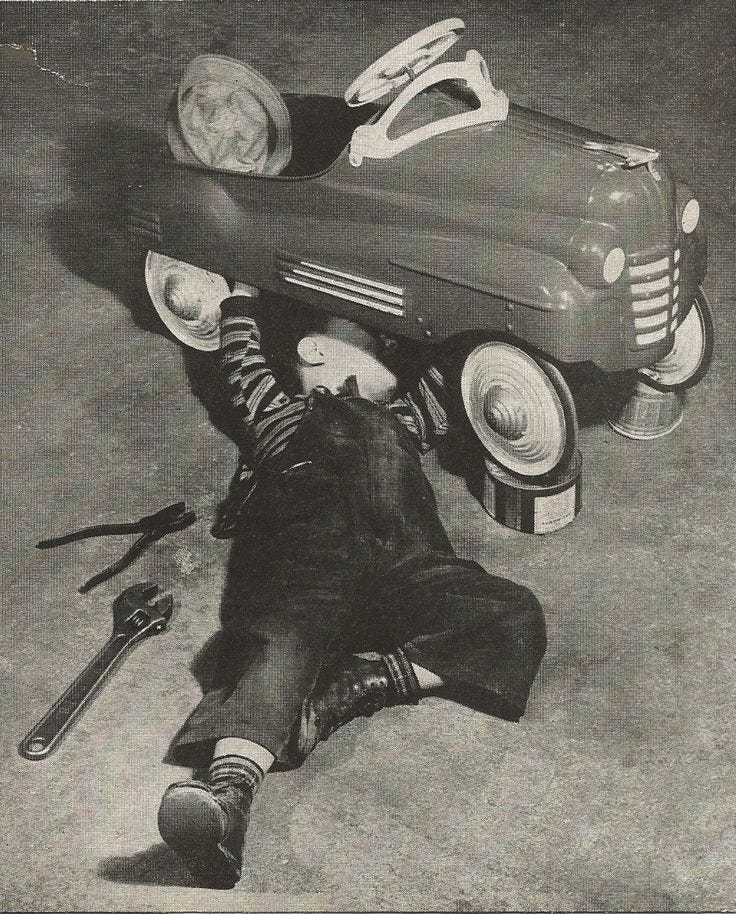
My father and I had what one might call diametrically opposed types of intelligence. Dad could repair anything mechanical that was broken. I mean virtually anything. A car. A sink. A stove. A voting machine. A stapler. Anything.
I am very much lacking in this type of mechanical aptitude. Heck, as a teacher I even handed staplers off to be fixed by the nearest mechanically inclined student whenever one broke in my classroom.
My father, however, had some trouble reading. Yes, he could read, but he never really liked it that much. He much preferred to work with his hands.
And he surely couldn’t comprehend and enjoy reading Shakespeare, or books about astronomy, quantum physics, and cosmology - as does his son.
So who was the “smartest”, my father - or me?
Well, it totally depends on what test you might give to measure our specific individual intelligence.
The brighest owl on Earth will look dumb if you measure its intelligence by how well it eats poop (whereas a dung beetle will qualify as an unparalleled genius on a test measuring its singularly meaningful niche of being smart).
My friends, you will do few things more meaningful in this life than to help your children/grandchildren find out “in what ways” they are smart.
Let them try a sport. Let them try art, dance, music, mechanics, chess, Scouts, volunteer work, anything-under-the-sun that may interest them. Neither you nor they may ever know in what ways they are smart until you “expose” them to new possibilities.
Whatever you do, don’t let school tests and report cards dictate the intelligence level of your child.
Don’t limit them to “what you think” they may be smart at. Introduce them to many different possibilities.
Help them find out in what ways they are smart.
Yes, you. Who else is better to do it?